 Posted by
 February is Black History Month in the states. So, in lieu of the next installment of Break on Through, we are doing something a little different. This week we are profiling six Black scholars, technologists, theorists, and/or “tinkiers” whose work is relevant to the interests tackled on this blog.
(note: all names listed in alphabetical order not in order based on rank or “relevance.” We’re not an indexing algorithm 😉 )
Simone Browne
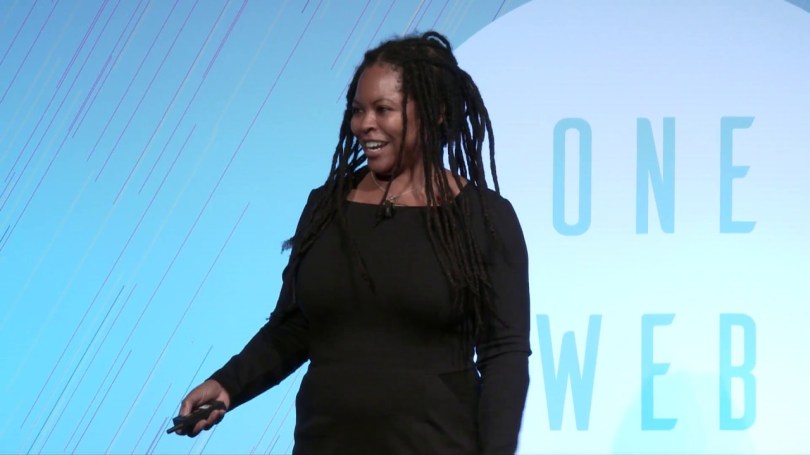
Simone Browne is Associate Professor in the Department of African and African Diaspora Studies at the University of Texas at Austin and the author of the multi-award winning Dark Matters: On the Surveillance of Blackness (2016). Dark Matters provides an exploration on surveillance studies that (re)situates Foucauldian notions of “pan-opticonism” in the context of a “white gaze” of surveillance. Browne introduces the concept of “racializing surveillance, which is “a technology of social control where surveillance practices, policies, and performances concern the production of norms pertaining to race and exercise a ‘power to define what is in or out of place (16)” and “dark sousveillance” (“sous” = “below,” “sur”=above) to account for how antiblack surveillance techniques can and have been “appropriated, co-opted, repurposed, and challenged” by Black subjects” in order to facilitate survival and escape” (21).Browne is also on the Leadership Board for HASTAC (Humanities, Arts, Science, and Technology Alliance and Collaboratory) and a founding member of the cyberfeminist coalition DeepLab.
This podcast interview with Beck Wise for the UT Austin Digital Writing and Rhetoric Podcast Zeugma provides and contextualize an introduction to her work.
See also her keynote lecture at Subverting Surveillance: Strategies to End State Violence Conference.
Kim Gallon

Kim Gallon is the founder and director of the Black Press Research Collective, a collaborative space for, in its own words, “an interdisciplinary group of scholars committed to generating digital scholarship about the historical and contemporary role of black newspapers in Africa and the African Diasporas (x).” Though the BPRC does not necessarily work with digital born texts, the BPRC relies on data visualization, multimedia, and particularly digitalization to preserve and re-envision the dynamic histories and presents of the Black press. Gallon is also an Assistant Professor of History at Purdue University, visiting scholar at the Center for Africana Studies at Johns Hopkins University, the author of History Compass and Journalism History, a study on the history of Black newspapers, and the author of the upcoming We Are Becoming a Tabloid Race: The Politics of Gender and Sexuality in the Black Press. An introduction to her work can be found at Black Press Research Collective.
Harlo Holmes
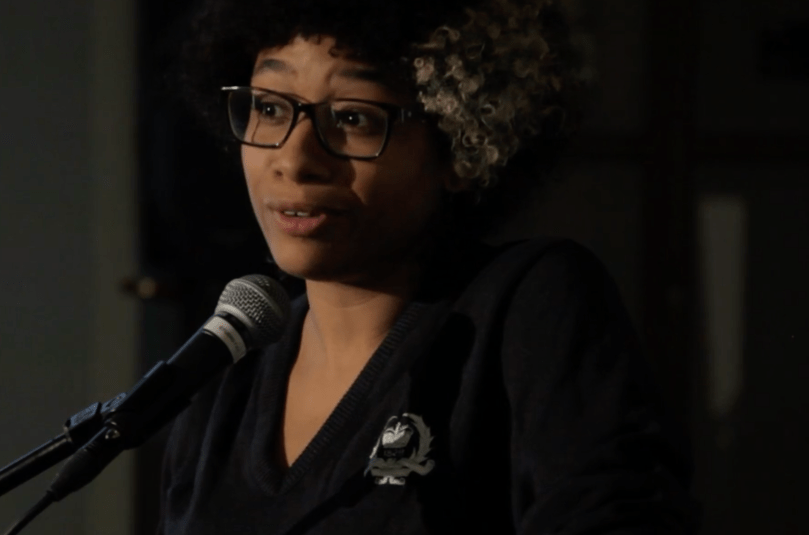
Harlo Holmes is a software developer, Digital Security Trainer, media scholar, and activist, and the current Director of Newsroom Digital Security at Freedom of the Press Foundation. Her work specializes in digital security, specifically, for journalists, and she is has worked with/on WITNESS, The International Bar Association, Open News, and “the computer-assisted reporting team” at The New York Times, (sponsored by Mozilla Foundation and the Knight Foundation), as well as DeepLab and __. Holmes also contributes regularly to The Guardian Project, which “creates easy to use secure apps, open-source software libraries, and customized mobile devices that can be used around the world by any person looking to protect their communications and personal data from unjust intrusion, interception and monitoring [x].” Holmes was the lead developer for CameraV for The Guardian Project. In 2015 at Deep Lab’s STUDIO for Creative Inquiry, Holmes coined the term “activist metadata” to refer “to information/knowledge producing technologies and practices which employ metadata for political activism.”
The video and full transcript can be found here.
Twitter: @harlo
Blog (currently defunct): http://harloholm.
Jessica Marie Johnson

Jessica Marie Johnson is an Assistant Professor of Africana Studies and History at Johns Hopkins University whose research lies at the intersections of critical race theory and the digital humanities; specifically, on digital approaches to her scholarship on Transatlantic with specific focus on enslaved and free women of color. In addition to multi-platform digital projects like African Diaspora, Ph.D. and Diaspora Hypertext, the Blog, Johnson has contributed to the LatiNegrxs Project, the Queering Slavery Working Group, and Black Code Studies, the later of which attempts to gather together scholarship which “draws attention to the permeability of the racial subject in an age of digital media and new technology” in a way that “highlights the importance of tying technology to a history of capitalist exploitation, global black insurgence, and Afrxdiasporic* creative energy.” (*that is the word’s correct spelling). In doing so, Johnson challenges the presumptions in the digital humanities about what work counts as sufficiently “digital” for the field, for example, centering the digital as a techne to approach texts and topics that were once excluded from the digital humanities “core” in the context of archiving:
“Archivists are using social media in particular ways to generate knowledge around police violence, prison abolition, social justice, etc. Our job as scholars is a) to be invested and involved in that organizing practice and b) to think about how the digital tools we have and the practices behind those tools also finds use here. I think people who work in archives are really on the ground and doing really great work thinking through these ideas [LaReview of Books Interview].”
Safiya Umoja Noble

Safiya Umoja Noble is an Assistant Professor at the University of Southern California (USC) Annenberg School of Communication. She is the author of Algorithms of Oppression: How Search Engines Reinforce Racism (2018). In this book, Noble employs digital research methods in sociology to examine how indexing search results of images of Black girls and Black women on Google participate in algorithmic redlining; particularly, in the centering of whiteness in online inter- and intra- action and the algorithmic reproduction of double consciousness. She ultimately argues for increased interdisciplinary and extra-academic community engagement in digital literacy initiatives by advocating a Black feminist technology studies. Noble is also the co-editor of the collections The Intersectional Internet: Race, Sex, Culture and Class Online and Emotions, Technology & Design.
Buy Algorithms of Oppression on Amazon or at NYU Press.
Interview for “Databites” at Data & Society
Marisa Parham
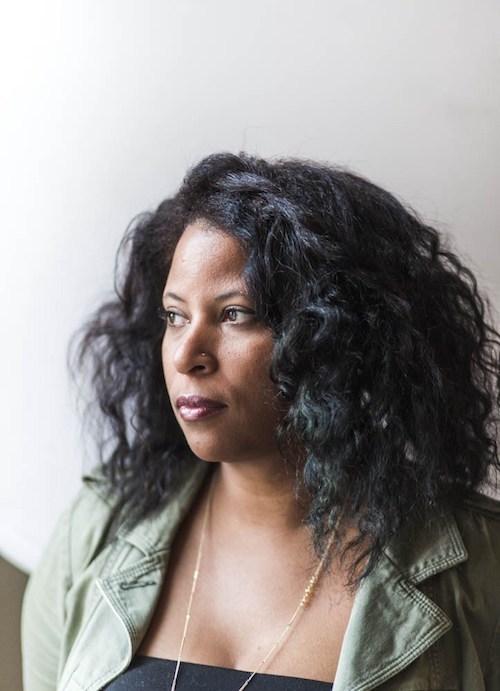
Marisa Parham is Professor of English at Amherst College and the director of Immersive Reality Lab for the Humanities (irlH). In addition to overseeing irlH, which is an interdisciplinary digital humanities workshop group aimed to put technological innovation in conversation with humanities critical paradigms, Parham is on the steering committee of HASTAC (Humanities, Arts, Science, and Technology Alliance and Collaboratory) and a member of DeepLab, She is also the author of Haunting and Displacement in African American Literature and Culture and numerous academic article. Her upcoming book projects are “Use Everything”: Octavia Butler’s Speculative Fictions and Black Haunts in the Anthropocene. At Amherst, she is also a faculty diversity and inclusion officer and has affiliations with the Black Studies and Film and Media Studies Departments. Her academic research focuses on, in her own words, “on texts and technologies that problematize assumptions about time, space, and bodily materiality [x]” particularly in the context of Black women’s bodies and experiences She is also a multi-media, multi-genre blogger whose writing can be found here.
Staff faculty profile at Amherst.
Concluding Notes:
Why only six? Brevity. Why these six in particular? Because we mentally “drew straws” due to having a lot of badass thinkers to choose from and more people we need to research.
Don’t worry — the need to high light Black folks who have made contributions to our field isn’t going away when the month ends. This isn’t the last you’ll hear of this mission until next February!
In the meantime, go head and submit in comments below or messages naming any Black innovator who you would like to see profiled!
 PoliTech